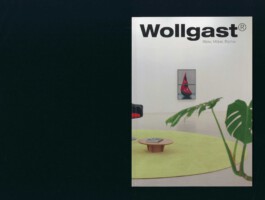



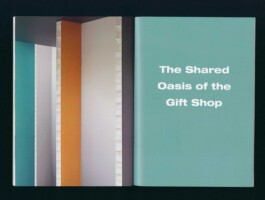
Wollgast. Bilder, Möbel, Bücher
40 pages
Edition of 150
Text: Michael Stockhausen
Design: Edi Winarni, Matthias Wollgast
Photography: Linda Inconi-Jansen, Achim Kukulies,
Moritz Wegwerth, Matthias Wollgast
25.5 x 18 cm
Düsseldorf 2016
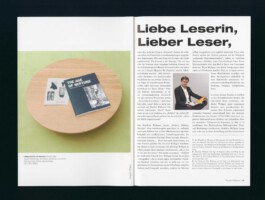
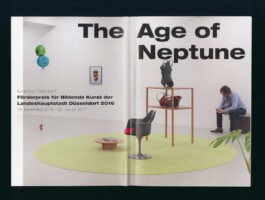
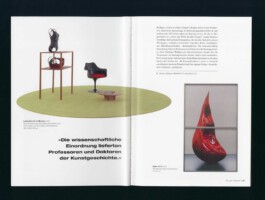
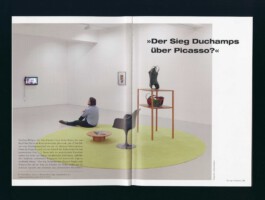
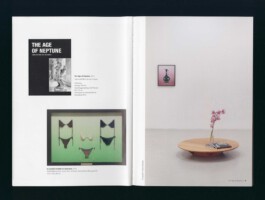
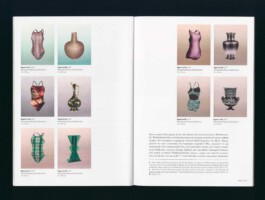
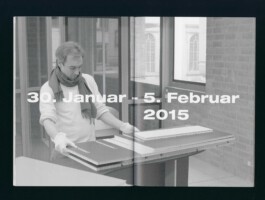
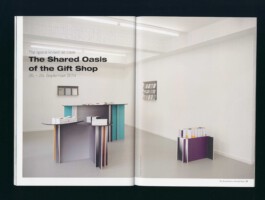
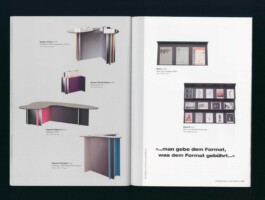
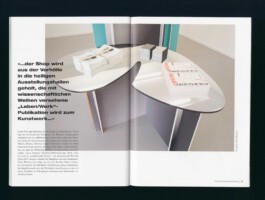
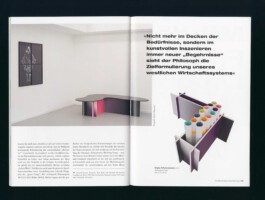
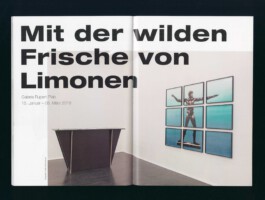
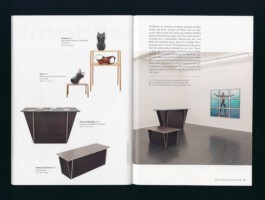
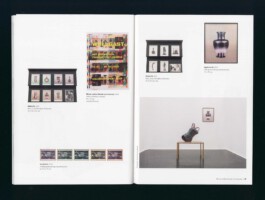
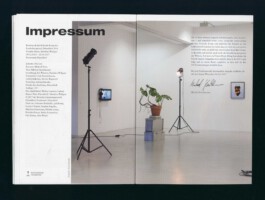
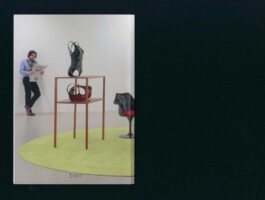
The publication ‘WOLLGAST. Bilder, Möbel, Bücher’ [Pictures, Furniture, Books] is designed in the aesthetic of a catalogue for designer furniture and interior décor. It was published on the occasion of an exhibition at Kunstraum Düsseldorf and contains images staged on site, in which I appear as an advertising figure among the exhibited works and props I brought along, such as plants and balloons.
Michael Stockhausen’s text was developed in conceptual collaboration and takes up the publication’s formal approach in its content:
“Phenomena at the margins of art discourse are systematically brought into the spotlight, marking at the same time thresholds to life and the everyday: the shop is brought out of limbo into the sacred exhibition halls, the ‘life/work’ publication, consecrated by scholarship, becomes an artwork, and the installation views of an exhibition become a lifestyle magazine of ‘good things’. The present print edition WOLLGAST. Bilder, Möbel, Bücher appropriates the graphic and photographic formats of the brave new world of commodities, which in turn appropriated the language of art, which itself drew on the development of arcades, shop windows and advertising – and so on. Where could this reference fit better than in Düsseldorf, a city of fashion and photography, where the school of photography that bears the city’s name also grew out of the spirit of advertising photography? On the pages of this publication, the painstakingly erected boundaries between design and art, product and work, fine and applied, heteronomy and autonomy, and ultimately between art and capitalism, become blurred. That the subtle distinctions between these supposed opposites follow modes of belief rather than anything else was argued by the sociologist Pierre Bourdieu as early as the 1970s. And the extent to which we may now be dealing with a chimera rather than with antagonistic structures is something Gernot Böhme is currently trying to capture with the term ‘aesthetic capitalism’: the philosopher sees the goal of our Western economic system no longer in meeting needs, but in artfully staging ever new desires. The present happily united in The Shared Oasis of the Gift Shop?”


